Welcome to the District Five Insider, a newsletter about the big decisions making their way through the City Council, what they mean for District Five, and how you can get involved. Follow to subscribe, and receive this newsletter in your mailbox.

Tuesday October 22, 2024

One Big Thing: Balancing Public Health and Community Concerns

Last night, the City Council made an important decision to protect public health while acknowledging the valid concerns of our residents regarding needle waste.

The Council voted not to move forward with Mayor Dion’s resolution to implement a restrictive 1:1 needle exchange ratio. While the intention behind the proposal was to address concerns about improperly discarded needles, this proposal would have undermined the successful work of Portland’s harm reduction programs, making it harder for people who use drugs to access clean syringes and increasing the likelihood of disease transmission.

Instead, we took a step forward by appropriating $936,479 in opioid settlement funds to three critical public health programs:

  1. Syringe Redemption Program – This innovative buy-back pilot, which has been successful in other communities, will encourage the return of used syringes, helping to reduce needle waste across the city.
  2. On-Peninsula Methadone Treatment Program – Bringing treatment closer to those in need, making it more accessible for Portland’s residents struggling with opioid addiction.
  3. Day Space for Unhoused Residents – A safe, supportive environment where people can access essential services, including harm reduction resources.

These programs will strengthen our city’s harm reduction efforts, keep our streets safer, and help those suffering from opioid use disorder get the treatment they need. By rejecting a harmful 1:1 exchange policy, we ensure that Portland remains a compassionate, effective leader in public health.

Two More Quick Hits:

1. Portland’s Green New Deal in Action

At the meeting, we received the Fossil Fuel Infrastructure Report from Sustainability Director Troy Moon. This annual report highlights Portland’s progress in transitioning to green building technologies, demonstrating how our Green New Deal is improving environmental outcomes while also ensuring economic equity.

Notable projects like Portland Commons and The Casco have been developed without reliance on fossil fuels, setting a new standard for sustainable construction in our city. These projects show that it’s possible to balance development with strong environmental and social standards.

It’s critical that we defend these gains against efforts to roll back inclusionary zoning protections, which ensure that Portland remains affordable for all its residents. By aligning climate action with housing equity, our Green New Deal is a model for progressive cities across the country, and we will continue pushing forward to protect both our environment and our community’s affordability​.

2. Kiwanis Pool Project Funded and Approved

Great news for our community! The Council passed a $5.63 million appropriation to fund the Kiwanis Pool replacement project. This funding comes from a mix of $4.63 million in interest income earned from the city’s investment of American Rescue Plan Act (ARPA) funds and an anticipated $1 million in private donations. These funds will ensure we move forward with modernizing the pool, which will include ADA accessibility improvements, making it a welcoming and inclusive facility for all Portland residents. After delays due to higher-than-expected costs, we have secured the necessary resources to get the project back on track​.


Save the Date: District 5 Community Meeting

I’m excited to invite you to our next District 5 in-person meeting!

  • Date: Wednesday, November 20, 2024
  • Time: 6:00 PM
  • Location: Casco Bay High School Great Space

Stay tuned for more details. This will be a chance to connect, discuss local issues, and make your voice heard. I look forward to seeing you there!

ksykes@portlandmaine.gov 207-558-5764

Notice: Under Maine law, documents – including e-mails and text messages – in the possession of public officials or city employees about government business may be classified as public records. There are very few exceptions. As a result, please be advised that what is written in a text message or e-mail could be released to the public and/or the media if requested.
Welcome to the District Five Insider, a newsletter about the big decisions making their way through the City Council, what they mean for District Five, and how you can get involved. Follow to subscribe, and receive this newsletter in your mailbox.

Friday October 18, 2024

Exciting Developments at Trolley Park, Evergreen Cemetery, and Beyond

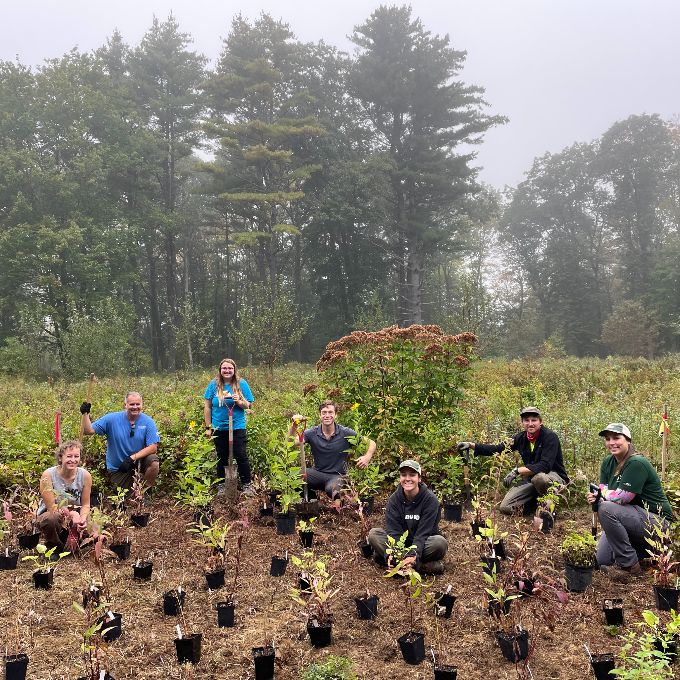
I’m thrilled to share some updates about the incredible work happening in District 5. Last week, we made significant strides in enhancing the beauty and accessibility of Trolley Park. Staff members from all City departments gathered for a morning of outdoor service and education.

Staff from the City’s needle exchange program taught everyone how to safely pick up any used needles we might find, helping to reduce fear and stigma around this important public health program. We did a park cleanup, planted a meadow of native plants and made improvements to the trails. This project is more than just a landscaping effort; it’s part of our broader goal to create sustainable, inviting spaces for all residents to enjoy.

We’re also making progress on the construction of the much-anticipated mountain bike skills park! This will transform a forgotten corner of Trolley Park into an active hub, encouraging more people to explore the park, get outside, and engage in healthy activities. You can read more about this in the latest Forecaster article, which highlights how this new feature will bring even more energy to this area.

Last month, I had the honor of attending the ribbon-cutting ceremony for a newly accessible trail behind Evergreen Cemetery. This initiative, a joint project between the City and Portland Trails, ensures that more of our community can enjoy this beautiful space, making it easier for everyone, including those with mobility challenges, to navigate and appreciate the peaceful surroundings. It’s a step toward creating more inclusive green spaces across District 5.

Finally, I want to give a big shout-out to Noah Querido and the Portland Youth Corps. Noah joined us at the Trolley Park event last week and told me all about the work these talented young people have been doing in our neighborhoods, especially North Deering Park, where they’ve put in new trails. If you’d like to learn more about this inspiring group and their work, check out this video:

The Portland Youth Corps program offers immense benefits, not only for the parks they help improve but also for the participants themselves. By learning new skills, gaining hands-on experience, and contributing to their community, these young leaders are making a meaningful impact on our city.

For more details on last week’s staff event and other park activities in District 5, take a look at the city’s latest newsletter update here: Parks & Recreation September 2024 Update.

Let this beautiful season draw you into our parks and trails, where you can connect with nature and the vibrant colors of fall. I look forward to seeing you all in our parks as these exciting projects unfold!

ksykes@portlandmaine.gov 207-558-5764

Notice: Under Maine law, documents – including e-mails and text messages – in the possession of public officials or city employees about government business may be classified as public records. There are very few exceptions. As a result, please be advised that what is written in a text message or e-mail could be released to the public and/or the media if requested.

Welcome to the District Five Insider, a newsletter about the big decisions making their way through the City Council, what they mean for District Five, and how you can get involved. Follow to subscribe, and receive this newsletter in your mailbox.

Friday, October 11, 2024

Question B: Council Initiated changes to Portland’s Short-Term Rental Registration Requirements

Voting has begun in Portland, and many people are asking me about Question B on the municipal ballot.

This amendment to our Short Term Rental (STR) ordinance was passed by the Council but must be ratified by voters. It complements a number of other changes to our STR regulations passed by the Council in August. .

What are the changes?

1. Tightens registration requirements for owner-occupied STRs by requiring proof that the unit is the host’s primary residence. Hosts must supply the city with a) proof that they qualify for Maine’s “Homestead Exemption” at the unit, or b) Federal Tax Return (with financial information redacted) showing primary residence at the unit.

Why does this matter? Portland strictly limits the number of non-owner occupied STR licenses we issue, but we do not limit owner-occupied licenses. Stronger registration requirements will decrease the number of STRs being falsely registered as “owner-occupied” to get around the limit.

2. Adds registration requirements for Peaks Island short-term rentals, and requires the City to verify whether a unit is seasonal or year-round.

Why does this matter? The Council has established a new cap on the lumber of Peaks Island short-term rentals licenses we issue. The cap does not apply to seasonal properties. Question B requires the City to verify if Peaks Island STRs are year-round or seasonal when registering them, so we know if they’re subject to the cap or not.

3. Requires hosts of STRs in condominiums to provide proof that use of the unit as a short-term rental is allowed under the condo association’s governing documents.

Why does this matter? Current documentation requirements are too weak to enforce this proactively.

You can review the full text of the changes here.

ksykes@portlandmaine.gov 207-558-5764

Notice: Under Maine law, documents – including e-mails and text messages – in the possession of public officials or city employees about government business may be classified as public records. There are very few exceptions. As a result, please be advised that what is written in a text message or e-mail could be released to the public and/or the media if requested.

Welcome to the District Five Insider, a newsletter about the big decisions making their way through the City Council, what they mean for District Five, and how you can get involved. Follow to subscribe, and receive this newsletter in your mailbox.

Thursday, Sept 12, 2024

The only public health risk from needles is that we might not give out enough of them.

As a City Councilor and former healthcare educator, I have a duty to speak out against Mayor Dion’s dangerous and irresponsible opinion piece in the Press Herald today that spreads misinformation and puts members of the intravenous drug-using community at increased risk. 

Portland has a syringe distribution program because it is good public health practice, not “group think.” Worldwide, over one million people die every year from deadly infections caused by the reuse of needles, costing the public billions of dollars in treatment and end-of-life care. Many also suffer from limb-threatening skin infections and sepsis.

Having good needle distribution coverage is a key component of an effective disease prevention program. HIV and hepatitis B and C treatment is so costly (on the order of millions of dollars per patient) that even one additional infection can negate the cost savings of having a program at all. It’s a fragile equation: a syringe services program with an annual budget of $500,000 needs to prevent 3 new HIV infections per year to be cost-saving. To do that, we need to make sure everyone who needs a syringe can get one. No questions asked.

No one likes seeing needles on the ground. They are a reminder that people are hurting, and that there is a raging opioid epidemic happening all around us. But having a well-run needle distribution program like we have here actually improves needle disposal, because it comes along with public support for education, disposal, and needle boxes. If we are seeing increased needle waste, there are more effective interventions we can take to address this. Reducing the number of needles we give out is not one of them. Expert consensus on best practices for needle distribution programs is to have no limits on the number of needles given out, so that people can take extra needles back to members of their community who may not be able to access the program themselves. 

The fact that we freely distribute a lot of needles in Portland, during an opioid crisis, is a very good thing, not a problem. Trying to arbitrarily shrink this program down to a 1:1 clean-for-dirty “needle exchange” does nothing to solve opioid addiction, will result in a secondary public health crisis, and is not an evidence-based approach to reducing needle waste. 

It is really important to educate people who are concerned for their safety that the risk of communicable disease from needles found on the ground is extremely, extremely low. In a worldwide non-healthcare workplace study, spanning more than 20 years since the start of the AIDS epidemic to 2008, less than 3 confirmed cases of HIV, hepatitis B/C transmission from needle sticks were identified. Extrapolate that out beyond the workplace, to the public at large, and the threat posed by discarded needles is certainly not “a daunting hazard to Portlanders” or equal in any way to an HIV/HCV/HBV outbreak among drug users.   

The fear of needles is deeply rooted in our society, and so is the fear of IV drug users and homeless people. Changing public policy to align with fears that have absolutely no basis in fact would be a grave mistake. A better solution to Portland’s needle waste concerns is to implement a program founded in public health research, such as a needle buy-back program, which is incentivizing, not punitive, and has been effective in Boston and New York at reducing needle waste. That is the solution I support.

We are in an opioid epidemic because greedy pharmaceutical companies pushed these addictive drugs on the public. We have a needle waste problem because the commodification of housing has resulted in a housing affordability crisis that leaves many people who use IV drugs unsheltered, with nowhere to dispose of their syringes. Instead of fighting needle distribution, let’s apply our efforts towards social programs that build housing and create addiction recovery beds. 

ksykes@portlandmaine.gov 207-558-5764

Notice: Under Maine law, documents – including e-mails and text messages – in the possession of public officials or city employees about government business may be classified as public records. There are very few exceptions. As a result, please be advised that what is written in a text message or e-mail could be released to the public and/or the media if requested.

Patient Power

I’m honored and thrilled that you’ve elected me to be your next City Councilor in District 5. We have big work to accomplish, and I’m ready to roll up my sleeves.

It has been an honor and a privilege to be one of the first candidates to run clean in Portland. I’ve talked with so many of you over the last six months about the value of our new Clean Elections program, and how it allows candidates to run competitive campaigns. As we’ve seen this cycle, Portland Clean Elections has already reduced the amount of campaign spending overall in Portland elections. I hope that other municipalities across Maine will adopt similar programs to make it possible for working-class people to enter politics and transform our communities.

I look forward to meeting many more of you as we do this work together. The message I want everyone to hear right now is that I care about you, I value your unique perspective, and I want to hear from you. I have a 90-day plan to build a stronger community and will share it with you soon. There will be a regular D5 Newsletter as well, so please hit the “follow” button and confirm your email address so you won’t miss any important news.

For now I want to send massive thanks out to the many campaign volunteers, Clean Elections donors, neighbors, friends, furry friends, and family members who made this campaign not just successful, but positively joyful. You never stopped believing, and that made all the difference. I’ve been so inspired by your talents, hard work, faith, humor, and love, and I’ll carry all of that forward with me into office. It takes patience, trust, and hard work to build a people-powered movement. If today’s results are any indication, we’re well on our way.

At a street fair recently, I met a sidewalk poet who spontaneously lent their energy to this campaign with a poem that still leaves me breathless with wonder. I think it says everything. Enjoy! -Kate

PATIENT POWER a poem for Kate, by Coelti

What we build is
up to us,
attention clarifying
what is expressed
& what is hidden.
We counter what might 
have been & what 
has been too long,
patient power presencing
in the relational process
of community. 

If we make it official,
through all the arenas 
available to cooperation,
it will be through our hands
that the work is done.

Minds can make much of a 
future unwritten, but
it is touch that makes 
the long haul wonderful,
a journey of belief
meeting the art
of the possible. 

It’s Election Day! How do I vote?

Election Day is today, Tuesday November 7, 2023. Polls are open from 7 am – 8 pm

Polling locations are ADA compliant and it’s FREE to ride the Metro bus on Election Day.

Return absentee ballots by 8 pm on Election Day to one of two 24-hour secure drop boxes by the Myrtle Street entrance of City Hall, or the Public Works building at 212 Canco Road.

Maine has same-day voter registration! If it’s your first time voting in Maine, you can register at the polls on Election Day. Just bring an ID, and a piece of mail with your address on it, if possible.

Click the button below and enter your address to find your polling location!

What is Social Housing?

For over a decade, we’ve given private developers money, land, and tax incentives to build housing in Portland, only to come up 10,000 units short of what we need today. Workers, families, young people just starting out, students, and retirees all suffer under a housing market that caters to real estate speculators, corporate landlords, and wealthy second and third home investors.

Home ownership was once how millions of Americans were able to enter the middle class and build financial security for our families, but no more. In Portland, owning a home is increasingly the exclusive privilege of the already wealthy. Cost burdened renters are unable to save for a down payment on a first home, and even if they could get ahead, what used to be “fixer-uppers” are now sold as tear-downs to make way for high-end single family homes. It would be foolish to continue to invest in this failed system and expect different results.

As Portland looks to implement new State and local zoning regulations to undo a century of exclusionary zoning, and increase density, we must also recognize that more housing supply overall will not automatically lower home prices, or make it easier to find an affordable apartment. In fact, up-zoning areas where affordable housing development has been resisted can have the opposite effect, increasing speculation and displacing people of color. Portland’s historic districts may have actually helped stabilize housing for low income BIPOC communities by preventing exactly this kind of rapid development.  

So, how do we build a lot more housing in Portland without creating out of control gentrification, displacement, and racial inequality? The answer is non-market housing, or “Social Housing,” which is built for the express purpose of housing people, not extracting profit, and remains permanently affordable because it’s shielded from market incentives. Social housing also helps to stabilize the private market by providing affordable alternatives.

And it delivers a higher return on public tax dollars because it remains off the private market forever. As loans are paid down, rent payments are leveraged to build more housing. And the more of it we build, the more market stability it provides.

Social Housing also fosters greater democracy and social equity among residents because it’s community-owned and managed. The model has been used successfully around the world, most notably in Vienna, where 60% of people live in public housing, and competitions for funding ensure that housing is beautifully designed and conforms to rigorous environmental standards. Seattle, WA passed a social housing initiative in February, and Montgomery County, MD has been using the model successfully for decades.

Social Housing is a broad term that can include mixed income public housing, limited equity co-ops built on community land trusts, and non-profit owned and managed rentals, some of which we are already doing here in Portland. But we need more of it. A lot more. Social Housing is a way to address Portland’s housing crisis that will help us build the housing we need now, and prepare for future growth.

If elected, I’ll make it my top policy priority.  

One small but mighty trail.

A couple of weeks ago, I was invited to ride my bike around District 5 with the Portland Bicycle and Pedestrian Advisory Committee and answer their 2023 Candidate Survey. It was a beautiful day and a lot of fun meeting the other candidates and talking with members of the committee about their work.

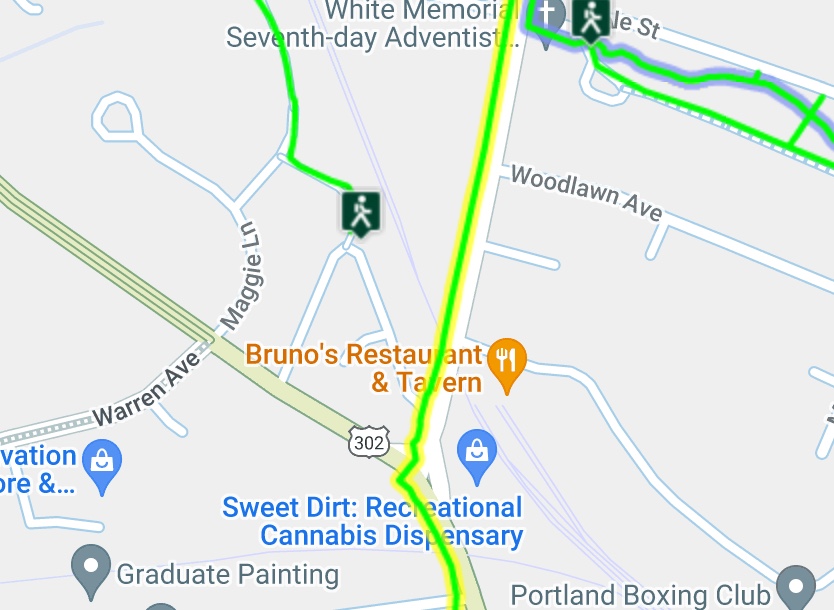
I’m an avid mountain biker and thought I knew Portland Trails backward and forward, but they showed me a cut-through I’d never seen before. It’s a nifty little connector from Maggie Lane to Eleanor St./Goodridge Ave. that allows you to avoid Morrill’s corner and Forest Ave. The trail that extends from it goes all the way out to Riverside Industrial Parkway and opens up some exciting possibilities as a commuter route. I’ve been using it a lot to knock on doors in the Riverton neighborhood.

The Advisory Committee does really great work researching bicycle, transit, and pedestrian issues, including handicap accessibility in Portland. They educate the public and advise the City on projects, including the Homeless Services Center, Franklin Street re-design, snow removal on sidewalks and around bus stops, and the need for bike safety education in our Public Schools. You can see their list of priorities for 2023 here.

If you’re excited about improving conditions for non-vehicular modes of transportation to make Portland more equitable and achieve our climate goals, please consider joining the committee and helping to advance their work. I look forward to working with them on projects in the future.

Kate Sykes
Clean Elections Candidate
City Council, District 5
207-558-5764
Kate@KateSykes.com
katesykes.com